
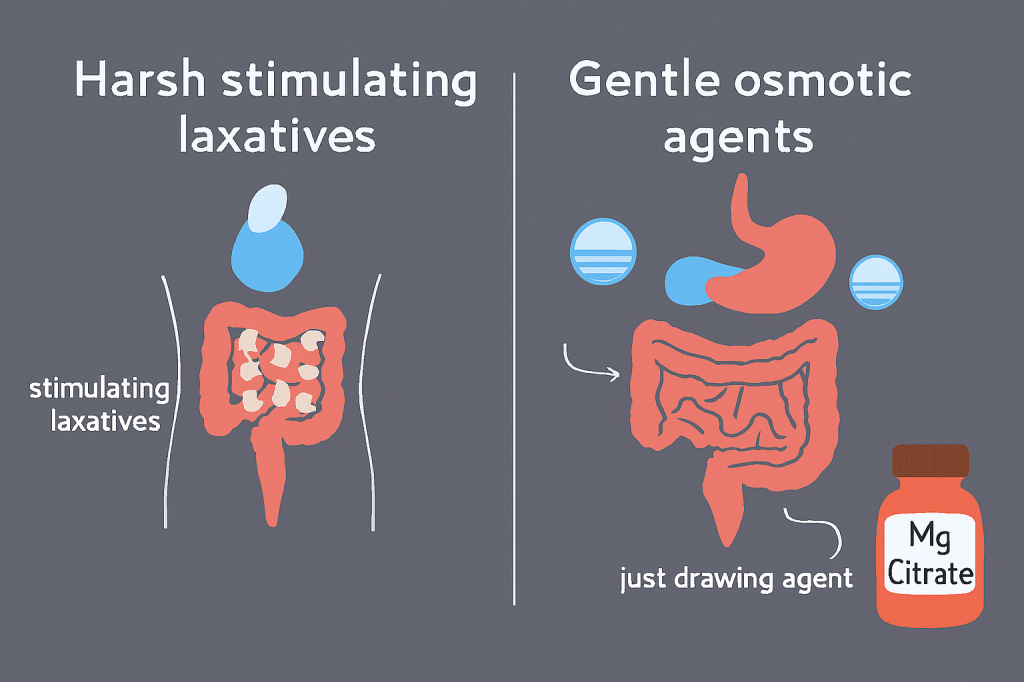
Quick Summary: If you are in pain and haven’t pooped for days, don’t panic. This emergency reset uses a “Nervous System First” approach. The 10-Minute Fix: Perform 5 minutes of 4-7-8 breathing, take 200–400mg of Magnesium Citrate with warm water, and perform a clockwise abdominal massage.
If you’re reading this, you’re likely in a state of discomfort and anxiety. The urge to grab the strongest stimulant laxative on the shelf is overwhelming. You want relief, and you want it now.
However, for those with a high-stress lifestyle or IBS-C, aggressive stimulants often backfire. This guide offers a different path—one grounded in physiology and the gut-brain axis—to safely restart your digestion.
Why Standard Laxatives Often Fail for IBS-C
When you’re desperate, you might reach for stimulants like senna or bisacodyl. For many, these ignore the root cause:
- The “Freeze” Response: Chronic constipation is often a nervous system in “dorsal vagal shutdown.” Forcing a clenched system to contract with chemicals can be intensely painful.
- The Adaptation Trap: Your colon can become dependent on stimulants, leading to “lazy bowel syndrome.”
The NeuroSpirit Emergency Plan: Signal “Safety” to Restart Motility
Step 1: Immediate Nervous System Reset (The Vagus Nerve Hook)
Anxiety inhibits the Vagus Nerve, your body’s primary “rest-and-digest” highway. Before ingesting anything, you must lower the alarm signal.
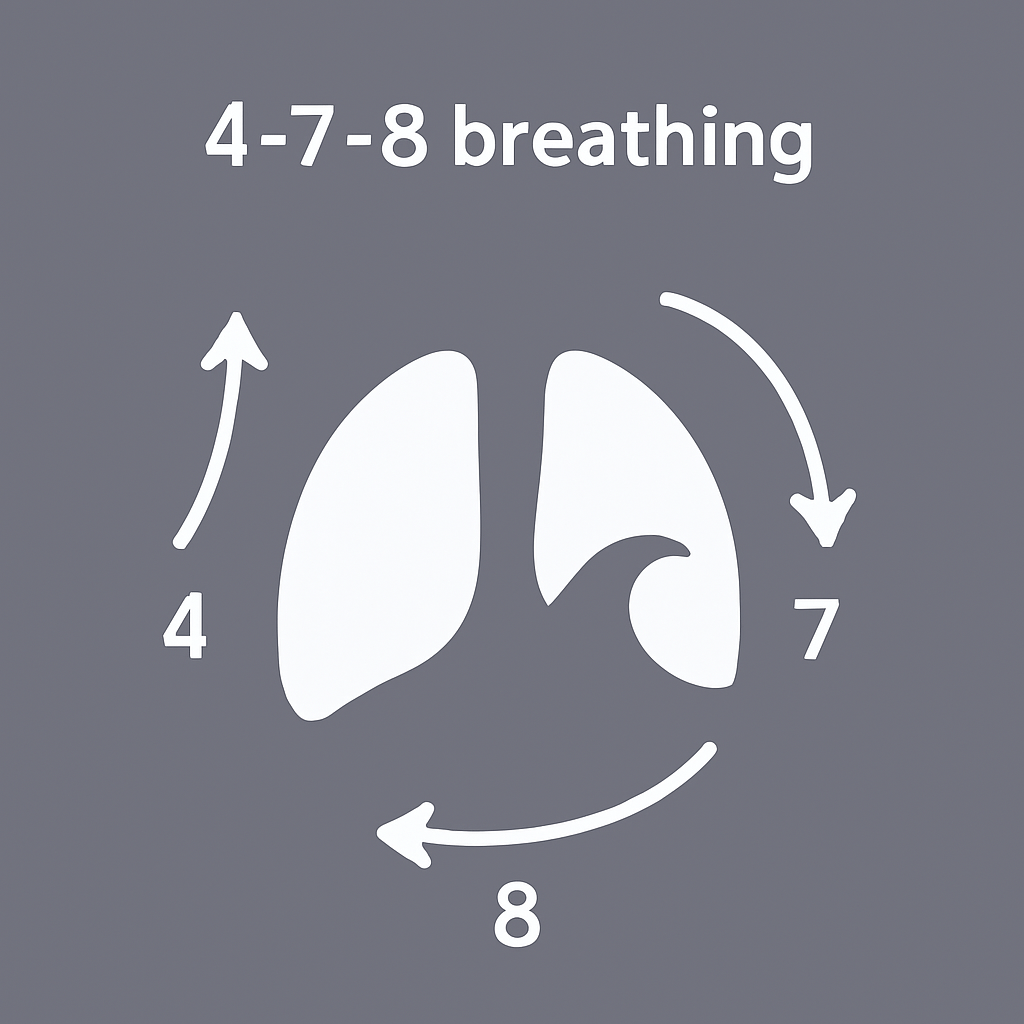
- The Science: Studies in Frontiers in Human Neuroscience show that prolonged exhales increase vagal tone, promoting gut motility.
- Your Action: 4-7-8 Breathing. Inhale through your nose for 4 seconds, hold for 7, and exhale through your mouth for 8. Repeat for 5 minutes to unlock the “freeze” state of your gut.
Step 2: The Osmotic Nudge (Hydrate the Stool)
Instead of stimulants, use osmotic agents that draw water into the colon to soften stool naturally.
- Magnesium Citrate: A dose of 200–400mg with a large glass of warm water is the gold standard. It acts as a natural muscle relaxant for the enteric nervous system.
- Electrolyte Support: Drink warm water with lemon and a pinch of sea salt. Hydration is critical for the electrical signals that trigger peristalsis (muscle contractions).
- For a complete guide to choosing the right type and dose for IBS-C, see our detailed article: Magnesium for Constipation & IBS-C: Citrate vs. Glycinate.
Step 3: Physical Peristalsis Stimulation
Combine your internal work with external “manual” help to move the blockage.
- Abdominal Massage: Apply firm but gentle pressure and massage in a clockwise circle around your navel. This follows the natural path of the ascending, transverse, and descending colon.
- The Squat Position: Use a footstool to elevate your knees above your hips. This relaxes the puborectalis muscle, straightening the path for elimination.
Your Next Meal: The “Gut-Grease” Principle
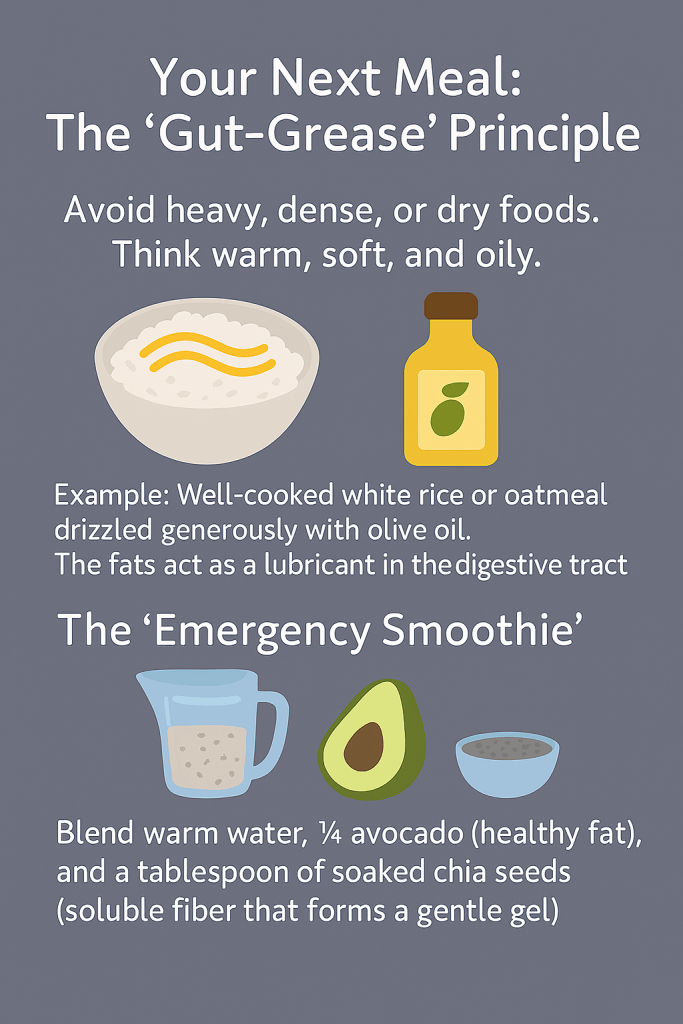
Avoid heavy, dry, or high-fiber foods immediately after a flare-up. Think warm, soft, and oily.
- The Lubricant: Well-cooked white rice or oatmeal drizzled generously with high-polyphenol olive oil or MCT oil.
- The Emergency Smoothie: Blend warm water, ¼ avocado (healthy fat), and a tablespoon of soaked chia seeds.
Stop the Emergency Cycle Forever
If these emergencies are becoming a pattern, your body is likely adapting to your remedies. A “one-size-fits-all” supplement routine eventually stops working because the nervous system learns to bypass it.
To break this cycle, you need a rotation that prevents adaptation.
→ Read Next: Why Every Constipation Remedy Stops Working (The Science of Adaptation)
It’s time to learn its language. My free 7-Day Vagus-Vital Starter Guide teaches you how to build that foundation of nervous system safety daily, so these desperate emergencies become a thing of the past.
Disclaimer: This post is for educational purposes based on my 15-year journey with IBS-C. It is not medical advice. Always consult your doctor before starting new supplements.

 NeuroSpirit | Science-Backed IBS-C & Chronic Constipation RelieF
Leave a comment