
If you’re caught in a loop of desperate searches, emergency laxatives, and temporary relief—only to find yourself back in the same panicked place weeks later—you’re not failing. You’re stuck in a biological adaptation loop.
This isn’t just about a sluggish gut. It’s about a nervous system that learns to associate your colon with danger, a gut-brain axis stuck on high alert, and well-intentioned remedies that eventually become part of the problem.
This post will show you why that frantic, middle-of-the-night cycle repeats and—more importantly—give you a science-backed plan to break free from it for good.
The Vicious Cycle: How One Emergency Plants the Seed for the Next
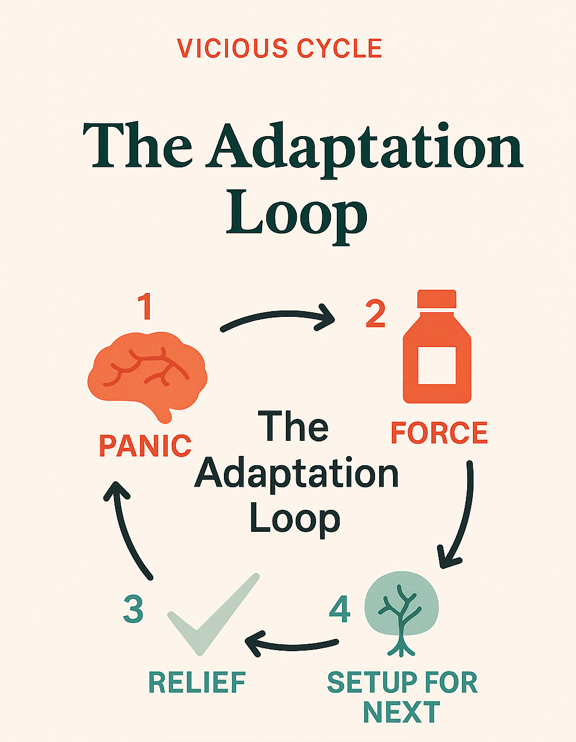
Every acute constipation episode is more than a physical event; it’s a traumatic learning experience for your nervous system. Here’s how a single emergency can program the next one:
- The Crisis: You’re in pain, bloated, and panicked. Your nervous system activates the “fight-or-flight” (sympathetic) state.
- The Emergency “Fix”: In desperation, you might use a strong stimulant laxative or an enema. While it provides relief, it does so by forcibly overstimulating a system already in shutdown. This reinforces the “danger” signal.
- The Aftermath: Your body clears the backlog, but the underlying neurological state—the “freeze” response governed by your vagus nerve—remains unchanged. As I explored in The Vagus Nerve Blockade: Why Chronic Stress Literally Stops Your Digestion, a stressed nervous system directly inhibits gut motility.
- The Setup: With motility still impaired and the gut-brain axis primed for alarm, the physical conditions for another backup begin almost immediately. The memory of the last crisis creates anticipatory anxiety, further tightening the loop. This is the essence of IBS-C 101: It’s Not a Gut Disease, It’s a Gut-Brain Communication Breakdown.
This cycle explains why simply managing each crisis with a one-time emergency plan isn’t enough for long-term healing. While a calm, step-by-step protocol is essential for acute relief, it doesn’t rewrite the nervous system’s learned alarm response. You must address the deeper programming itself.
Why Your “Between-Emergency” Strategies Stop Working
In the calm between storms, you try to be proactive. You take magnesium, probiotics, and eat more fiber. Yet, the emergency still returns. This is the frustrating science of adaptation at play.
Your body is designed to maintain balance (homeostasis). When you introduce a consistent, strong signal—like a daily osmotic agent—your smart physiology adapts to it. The receptors in your gut become less responsive. What worked at 200mg of magnesium now requires 400mg. This is a core reason Why Every Constipation Remedy Stops Working.
The problem isn’t the tools; it’s using them as constant crutches on a system that hasn’t been taught how to walk on its own again. They manage the symptom in the colon but don’t reset the master signal from the brain.
The 3-Part Framework to Break the Cycle for Good
Breaking free requires shifting from crisis management to system retraining. This framework targets the root: your nervous system.
Phase 1: Reframe the Emergency (Your Mental Reset)
The next time you feel an emergency coming on, pause. Before you reach for anything, acknowledge this is a signal, not a sabotage.
- Action: Use the calm, science-backed emergency steps but with a new intention. As you do the 4-7-8 breathing, mentally affirm: “I am safely clearing this backlog so I can begin retraining my system.” This begins to dissociate the act of relief from panic.
Phase 2: Build Daily “Safety” Signals (The Foundation)
This is the non-negotiable work between crises. Your goal is to consistently signal “safety” to your gut-brain axis to lower its default alarm setting.
- Action 1 – Vagus Nerve Toning: For 5 minutes each morning, practice diaphragmatic breathing. This isn’t optional; it’s like brushing your teeth for your nervous system. It directly stimulates the vagus nerve, promoting the “rest-and-digest” state.
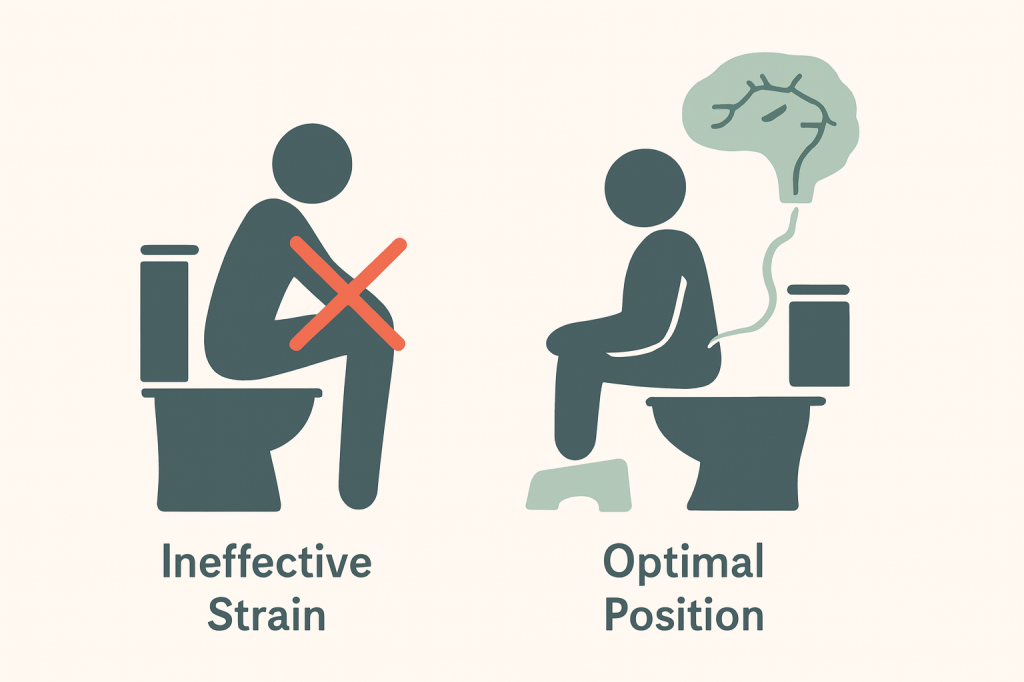
- Action 2 – Defecation Retraining: Go to the bathroom at the same time every day (post-breakfast is ideal). Sit with your knees above your hips (using a squatty potty can help). Breathe deeply and do not strain. You are teaching your brain-gut axis a new, calm routine. This is especially critical because chronic straining and anxiety can lead to pelvic floor dysfunction, where the muscles you use to go actually tighten when they should relax. Retraining creates a pattern of ease, not force.
Phase 3: Use Tools Strategically, Not Constantly (The Taper)
Your supplements and diets are supports, not saviors. Use them to facilitate the new nervous system training.
- Action: If you use magnesium, shift to a cyclical protocol (e.g., 3-4 days on, 3-4 days off). On “off” days, double down on your breathing and mindfulness. This prevents adaptation and allows you to observe your body’s innate rhythm returning. View probiotics as an 8-week course to support microbiome diversity, not a permanent pill.
Your First Week: A Sample Protocol to Start Today
| Day | Morning (5 min) | With Breakfast | Evening (5 min) | Supplement Notes |
|---|---|---|---|---|
| 1-3 | Diaphragmatic Breathing | Go to bathroom, no pressure | Gentle Abdominal Massage | Take your usual magnesium. |
| 4-7 | Diaphragmatic Breathing + 1 min of Humming | Go to bathroom, no pressure | 4-7-8 Breathing | Consider a “low” or “off” day for magnesium. Observe. |
The Goal This Week: Consistency in signaling, not perfection in outcome. The point is to build the habit of safety.
When to Seek Specialized Help
If you implement this for 4-6 weeks and see no change in baseline anxiety or gut function, it’s time to investigate deeper layers. As outlined in the diagnosis map for chronic constipation, persistent cycles may point to SIBO, pelvic floor dyssynergia, or other complex factors that require a skilled practitioner to diagnose and treat alongside nervous system work.
The Path Forward: From Surviving Cycles to Sustained Rhythm
Healing isn’t about never having a slow day again. It’s about changing the conversation between your brain and your gut. It’s moving from a state of constant threat and emergency overrides to one of trust and rhythmic function.
You break the cycle not by fighting each fire with a bigger hammer, but by teaching your body that the house is no longer in danger. The real remedy is safety.
Ready to go deeper? If the cycle of anxiety and constipation feels endless, explore the foundational guide: Stuck in IBS-C? What If Your Constipation Was Actually a Nervous System Signal? to understand the core shift needed for lasting change.
Disclaimer: This post is for informational purposes based on my experience and research. It is not medical advice. Please consult your healthcare provider before making any changes to your regimen.
Discover more from Neurospirit
Subscribe to get the latest posts on healing the gut-brain connection sent to your email.
Recommended Next Reads on Neurospirit:
- Morning Anxiety & Constipation: How I Used My Breath to Calm My Gut After 15 Years – A personal story applying these principles.
- When Your Gut is Stuck, So Is Your Mind: The Constipation-Anxiety Loop – Delving deeper into the psychological cycle.

 NeuroSpirit | Science-Backed IBS-C & Chronic Constipation RelieF
Leave a comment