

Understanding Your Nervous System’s Survival States. This isn’t about willpower. It’s about biology.
If you’ve ever felt wired but tired, emotionally reactive, or stuck in a loop of overthinking—you’re not failing. You’re protecting yourself. Your nervous system isn’t broken; it’s dysregulated.
This isn’t about willpower. It’s about biology.
Your Brain’s Threat Detection System (The Amygdala)
Your amygdala is your brain’s built-in alarm. It constantly scans for danger—real or perceived—and activates your fight-or-flight response. Chronic stress, unresolved trauma, or even constant multitasking can keep this system on high alert.
When your brain perceives threat, it floods your body with cortisol. You feel anxious, wired, and exhausted. You can’t “just relax” because your body doesn’t feel safe.
Polyvagal Theory Simplified
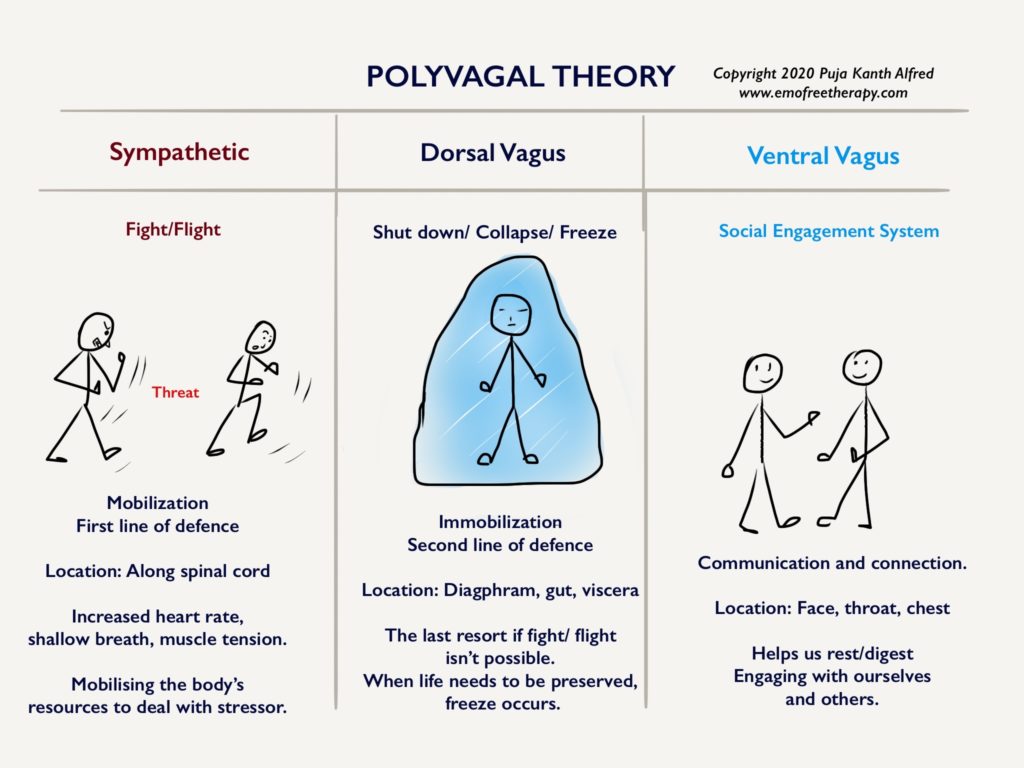
Polyvagal theory explains how your vagus nerve regulates your stress response. When you feel safe, your body enters a parasympathetic “rest and digest” state. When you feel unsafe, it shifts into sympathetic “fight or flight” or dorsal “freeze.”
Signs of dysregulation:
- Trouble sleeping
- Digestive issues
- Emotional volatility
- Feeling tired but unable to rest
- Anxiety that seems to come from nowhere
The Physical Cost of Chronic Hypervigilance
When your nervous system stays in survival mode, your body pays the price:
- Cortisol disrupts sleep, blood sugar, and hormones
- Inflammation increases, impairing immunity and mood
- Nutrient depletion worsens fatigue and emotional instability
👉 For more on this, read: Your Cortisol Rollercoaster
A Real-Life Example: The Mother Who Couldn’t Lose Weight
One mother spent three years counting calories after childbirth. No weight loss. She was constantly multitasking—scrolling while eating, rushing between tasks, never truly resting.
Then she gave herself two hours a day of intentional pause: no phone during meals, slow walks, quiet time. Her body began to release weight.
She didn’t change her diet. She changed her state.
Her nervous system finally felt safe enough to let go.
How Supplements Can Support Psychosomatic Recovery
You can’t supplement away trauma—but you can support the body’s ability to regulate, repair, and adapt. The following nutrients provides foundational nutrients that help your nervous system shift out of survival mode.
🧠 Supplement Table with Recommended Daily Intake
| Nutrient | Function | Sources | Recommended Daily Intake |
|---|---|---|---|
| Magnesium | Calms nervous system, lowers cortisol | Spinach, almonds, pumpkin seeds, avocado, banana | 310–420 mg/day |
| Omega-3 (EPA/DHA) | Reduces inflammation, supports mood | Fatty fish (salmon, sardines), flaxseed oil | 250–500 mg/day EPA+DHA |
| Vitamin B6 | Supports serotonin, dopamine synthesis | Chickpeas, bananas, fortified cereals | 1.3–2.0 mg/day |
| Vitamin B12 | Protects myelin, supports energy | Eggs, dairy, meat, fortified foods | 2.4 mcg/day |
| Folate (B9) | Brain development, methylation | Leafy greens, legumes, citrus fruits | 400 mcg/day |
Sources: NIH Nutrient Recommendations
These nutrients aren’t trendy—they’re essential. And they’re often missing from modern diets due to soil depletion, stress, and poor absorption.
Evidence-Based Management Strategies
You can’t force relaxation—but you can invite it. These strategies help signal safety to your nervous system:
1. Support Your Vagus Nerve
Try the physiological sigh: two quick inhales through the nose, one long exhale through the mouth. It activates your vagus nerve and lowers cortisol. (Do 3 reptitions for each time)
2. Time Your Exercise Right
Avoid intense workouts during burnout. Instead, focus on:
- Morning walks in sunlight
- Gentle yoga or tai chi
- Resistance training 2–3x/week
3. Master Your Blood Sugar
Eat balanced meals every 3–4 hours with protein, fat, and fiber. This prevents cortisol spikes from low blood sugar.
4. Focus on Mineral-Rich Foods
Build your foundation with:
- Zinc: Pumpkin seeds, lentils
- Selenium: Brazil nuts, eggs
- Magnesium: Spinach, almonds, dark chocolate
5. Optimize Sleep Hygiene
Create a wind-down routine: no screens 1–2 hours before bed, cool/dark room, consistent sleep/wake times.
The Takeaway: Safety First, Supplements Second
You don’t need more discipline. You need more safety signals.
Start with breath, movement, and meals. Then support your body with foundational nutrients—like those in the Daily Health Kit. They won’t fix trauma, but they’ll help your body feel safe enough to heal.
Recovery isn’t about doing more. It’s about doing less, more consistently.
📚 Further Reading
- Magnesium & Stress
Harvard Health: What can magnesium do for you and how much do you need?
MDPI: The Effects of Magnesium Supplementation on Subjective Anxiety and Stress — A Systematic Review - Omega‑3s & Mood
Harvard Health: Omega‑3 fatty acids for mood disorders
JAMA Network: Association of Omega‑3 Polyunsaturated Fatty Acids With Anxiety Symptom Severity - B Vitamins & Nervous System
Harvard Health: Foods linked to better brainpower
CNBC/Harvard Nutritionist: The No. 1 vitamin to keep your brain young and healthy - Polyvagal Theory & Vagus Nerve
Frontiers in Behavioral Neuroscience: Polyvagal theory — clinical insight
Polyvagal Institute: What is Polyvagal Theory?
Tired of trying to “just relax” when your body won’t listen?
If willpower hasn’t worked, it’s time to speak your nervous system’s language.
In my free 7-Day Vagus-Vital Starter Guide, you’ll learn gentle, science-backed practices to signal safety to your body, ease anxiety-driven IBS-C, and help your digestion find its natural flow—no willpower required.
👉 Enter your email below to get instant free-guide access:
Disclaimer: This post shares insights from my 15-year journey with IBS-C and is for educational purposes only. It is not medical advice. Please consult your doctor before making any changes to your diet, supplements, or health routine.

 NeuroSpirit | Science-Backed IBS-C & Chronic Constipation RelieF
Leave a comment