
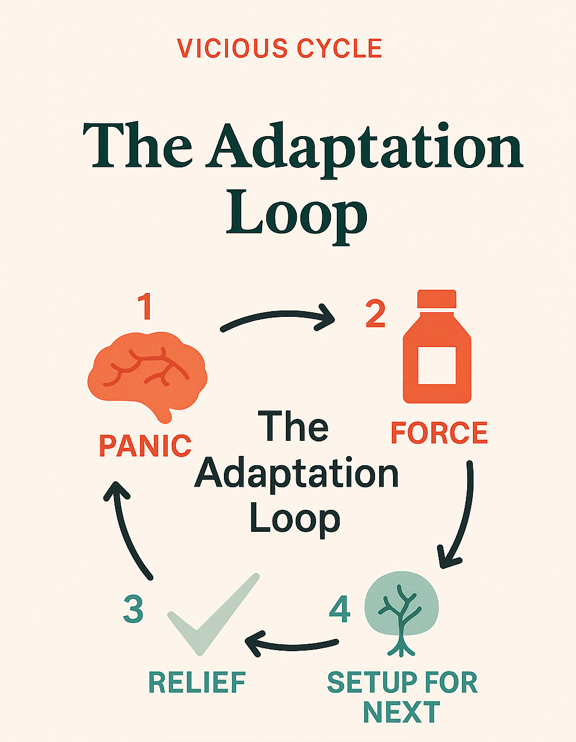
The Struggle: You found a constipation remedy that worked, only for your body to “outsmart” it weeks later. The Solution: The NeuroSpirit Rotation Protocol—a strategic, nervous-system-first method to keep your gut responsive and end the cycle of chronic constipation.
For 15 years, I lived in a cycle of hope and failure. I would find a “miracle” magnesium or a specific oil for my IBS-C, feel relief for ten days, and then… nothing. I used to think my body was “broken.”
Now I know the truth: Your body isn’t broken; it is adapting.
Why Your Constipation Remedies Stop Working
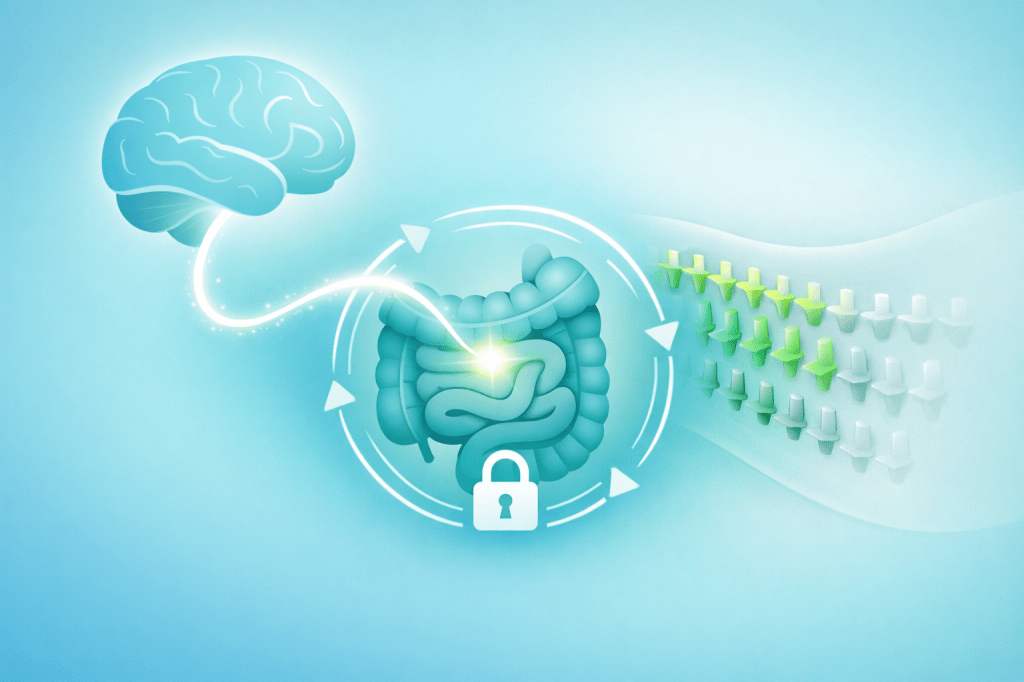
Your body’s primary goal is homeostasis—maintaining a stable internal environment. When you take the same high-dose stimulant or osmotic agent for constipation every single day, your enteric nervous system (the “second brain”) makes two major adjustments:
- Receptor Downregulation: Your gut receptors become “deaf” to the supplement’s signal, requiring higher doses for the same effect.
- The Lazy Bowel Effect: Your colon stops practicing its natural, rhythmic contractions because it is waiting for an external “push.”
The NeuroSpirit Rotation Protocol: A 3-Step System
To keep your gut responsive, we shift from “forcing” a movement to “facilitating” a natural reflex.
Step 1: Rotate Your Constipation Supplements
Treat magnesium and high-polyphenol oils as facilitators, not forever-crutches.
- The Strategy: Take your primary constipation supplement (like Magnesium Citrate) for 4 days a week, then switch to a different “lever” (like high-quality MCT or Olive oil) for the remaining 3 days. This rotation prevents your enteric nervous system from becoming “deaf” to the signal.
- My Personal Tip: I usually take my supplements or one spoon of oil the first thing after I wake up. This primes the digestive tract before the day starts. As for probiotics, I take them the night before to let them settle while I sleep.
Step 2: Signal “Safety” to the Anxious Gut
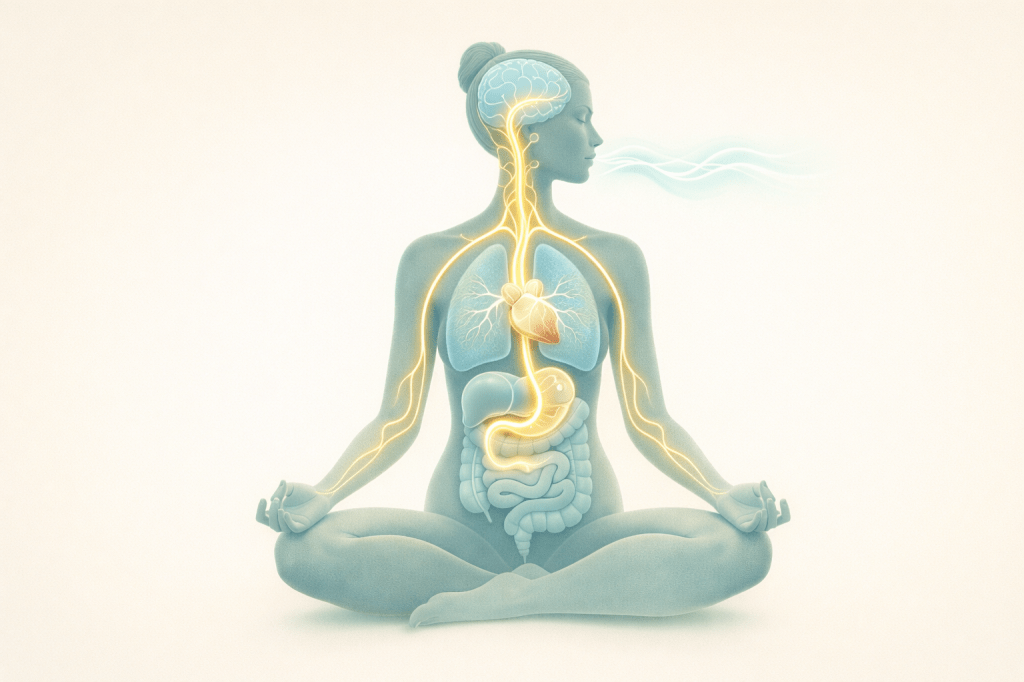
Your gut needs a signal of Safety before it can initiate a bowel movement. If you are in “fight-or-flight” mode, your body will prioritize survival over digestion, regardless of what supplements you take.
- The Strategy: Spend 2–5 minutes on diaphragmatic breathing (like the 4-7-8 technique) immediately after taking your morning supplements. This stimulates the Vagus Nerve, the main highway of the gut-brain axis, switching your physiology into “rest-and-digest” mode.
- My Personal Tip: I usually do this right after I take my supplements or oil in the morning, with a cup of hot tea or coffee. I start to do some breathing—the key is to not make it something stressful. Just relax.
Step 3: Retrain the Defecation Reflex
Consistency tells your brain-gut axis what to expect. By showing up at the same time every day, you are retraining a neurological habit to heal constipation permanently.
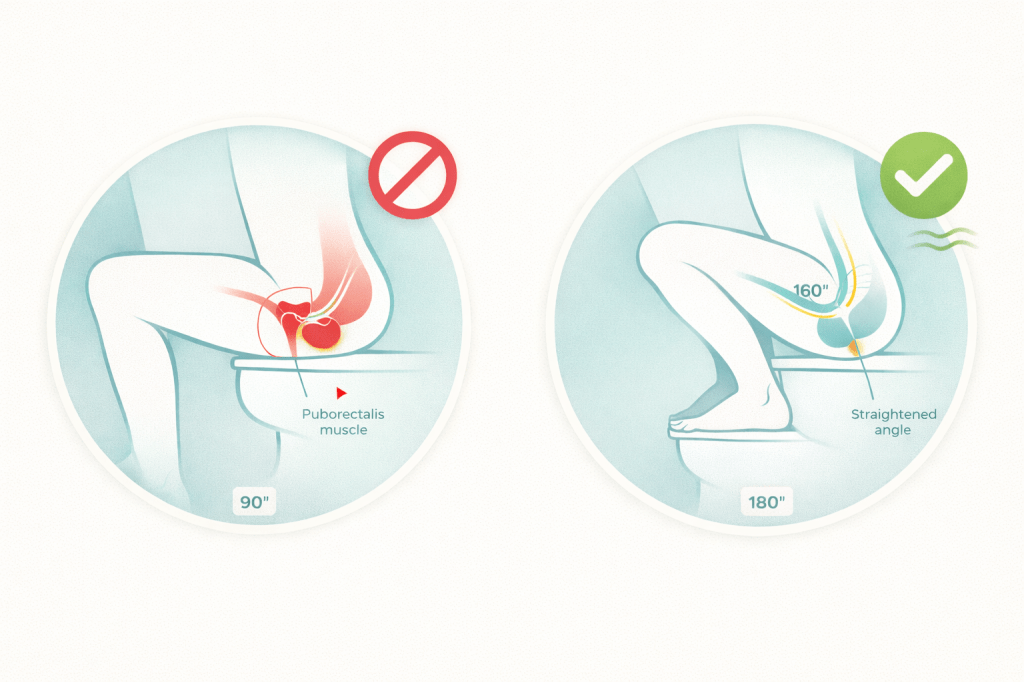
- The Strategy: Go to the bathroom at the same time every morning (post-breakfast is ideal) even if you don’t feel the “urge” initially. Use a proper squatting position to relax the puborectalis muscle—this is the muscle that “chokes” the rectum when you are sitting on a standard toilet.
- My Personal Tip: In this protocol, a squatting position means getting your knees higher than your hips (higher than your lap). This mechanical shift straightens the anorectal angle for a complete evacuation without the need for harmful straining.
Frequently Asked Questions
How long does it take for the gut to adapt to magnesium?
Most people notice a “plateau” in effectiveness within 14 to 21 days of consistent daily dosing. This is why the 4-day rotation is critical to keep your receptors sensitive.
Is “Lazy Bowel” permanent?
No. Your enteric nervous system is plastic, meaning it can be retrained. By using the Rotation Protocol, you are teaching your colon to take back the work of motility instead of relying on chemical irritants.
The Path Forward: From Fear to Flow
Healing chronic constipation is not about finding a “stronger” pill; it’s about removing the neurological blockades of anxiety and adaptation. By rotating your strategy, you are teaching your Enteric Nervous System—often called the “Second Brain” by researchers at Johns Hopkins Medicine—to take back its natural rhythm.
This process is supported by the science of neuroplasticity. Just as your body can adapt to supplements, it can also be retrained to respond to the natural “rest-and-digest” signals of the Vagus Nerve, a concept extensively studied by the Polyvagal Institute.
Ready to start your 90-day transformation?
- New to nervous system regulation? Start with: Stuck in IBS-C? What If Your Constipation Was Actually a Nervous System Signal?
- Emergency Relief: If you are currently stuck, follow this article Emergency Constipation Relief: A 3-Step Science-Backed Plan to get things moving immediately.
- Deep Dive: Learn more about why your body outsmarts remedies in Why Constipation Remedies Stop Working: The Science of Gut Adaptation
It’s time to learn its language. My free 7-Day Vagus-Vital Starter Guide teaches you how to build that foundation of nervous system safety daily, so these desperate emergencies become a thing of the past.
Disclaimer: This post is for educational purposes based on my 15-year journey with IBS-C. It is not medical advice. Always consult your doctor before starting new supplements.

 NeuroSpirit | Science-Backed IBS-C & Chronic Constipation RelieF
Leave a comment